

$NVEC (NVE CORP /NEW/)
Buy, Hold or Sell?
You decide — with data.
You’re not here for a price target.
You want to know whether owning NVE CORP /NEW/ at today’s price makes sense for you.
- 📊 You see the business behind the ticker
So you stop reacting to headlines and start thinking like an owner. - ⚠️ You anchor on 5 key financial signals
The ones that actually drive long-term outcomes — not noise. - 🤖 You analyze $NVEC using your favorite AI
Paste structured data into ChatGPT and ask better questions instantly. - 🔢 You decide at what price buying or selling makes sense
Not Wall Street’s target. Yours.
You don’t get told what to do. You gain clarity — and act from there.
Get notifications about NVE CORP /NEW/
I send you an email if I find something interesting about NVE CORP /NEW/.
Get AI-ready Data1. Quick Overview

1.1. Quick analysis of NVE CORP /NEW/ (30 sec.)

Can this business survive bad years?

Is this a good business at its core?

Is the business itself compounding over time?

Is value actually accruing to each share?

Is the Share Price aligned with Share Value?
1.2. Business Survival
Can this business survive bad years?

Enough cash for bills this year?

Would debt break this business in a crisis?
1.3. Business Quality
Is this a good business at its core?

Does this business turn capital into real profits?

Does this business keep a meaningful share of what it earns?
1.4. Business Value
Is the business itself compounding over time?

Is the business getting bigger over time?

Is the business actually retaining value it creates?
1.5. Share Value
Is value actually accruing to each share?

Does each share represent more of the business?

Is each share earning more over time?
1.6. Share Price
Is the Share Price aligned with Share Value?

How optimistic is the market about future earnings?

How much certainty is already priced into the assets?
2. Detailed Analysis
2.1. Growth of NVE CORP /NEW/ (5 min.)
Is NVE CORP /NEW/ growing?
| Most Recent Quarter | Last 12 Months | Year over Year | Grow (YOY-TTM) | Grow % | |
|---|---|---|---|---|---|
| How rich? | $58.2m | $60.3m | ? | ? | ? |
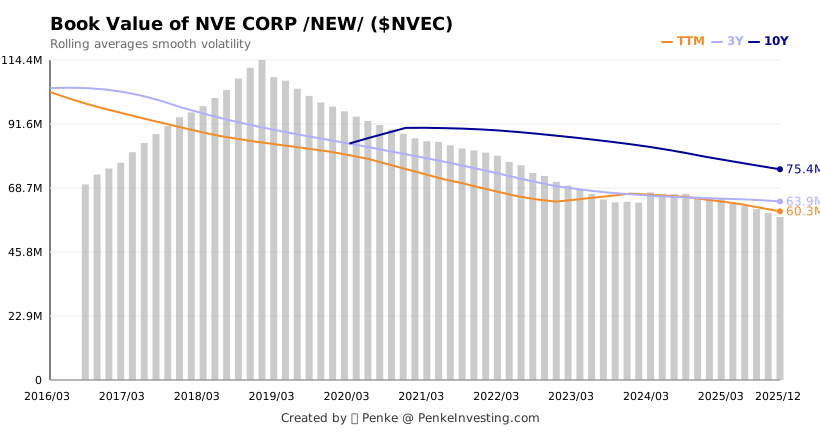
How much money is NVE CORP /NEW/ making?
| Last 12 Months | Year over Year | Grow | Grow % | |
|---|---|---|---|---|
| Making money | $35.7m | ? | ? | ? |
| Net Profit Margin | 134.8% | ? | - | - |
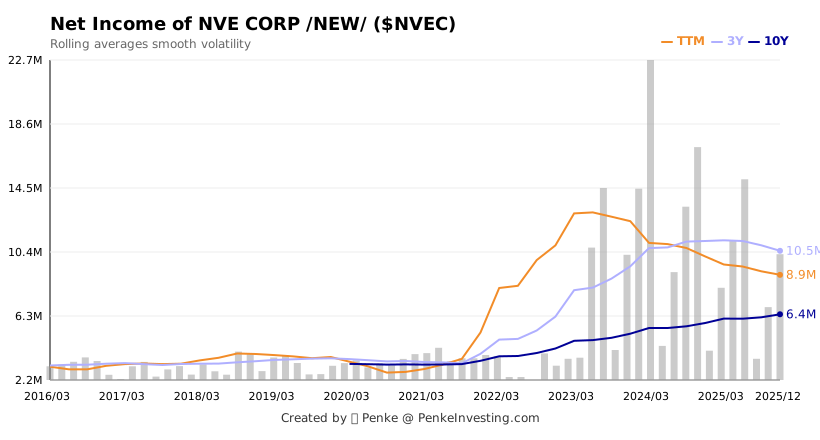
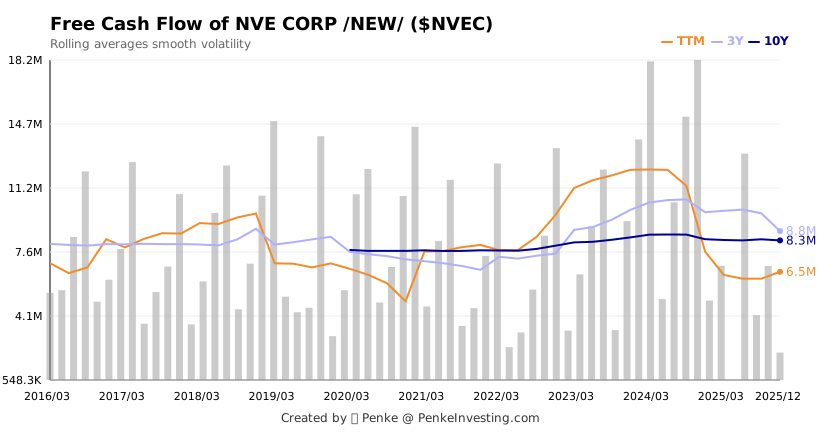
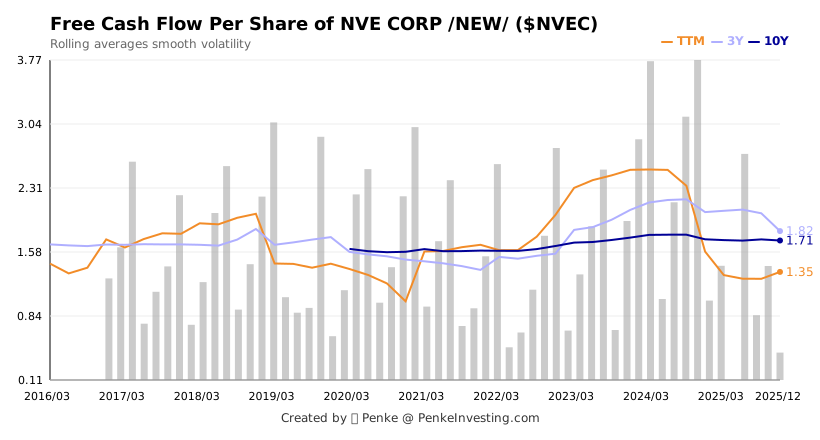
How much money comes from the company's main activities?
2.2 In-depth Summary
2.2.1. Financial Health Summary
Profitability Details
| Compared to previous year | Compared to industry | |
|---|---|---|
| The company is making a huge profit. | ||
| Using its assets, the company is efficient in making profit. | ||
| Using its investors money, the company is less efficient in making profit. |
Operating Efficiency
| Compared to previous year | Compared to industry | |
|---|---|---|
| The company is operating very efficient. | ||
| The company is very efficient in keeping operating costs low. |
Liquidity Details
| Compared to previous year | Compared to industry | |
|---|---|---|
| The company is very able to pay all its short-term debts. | ||
| The company is very able to pay all its short-term debts with the most liquid assets. |
Solvency Details
| Compared to previous year | Compared to industry | |
|---|---|---|
| The company is very able to pay all its debts by selling its assets. | ||
| The company is very able to pay all its debts with equity. |
Members only
Now let's go deeper into $NVEC.
You understand the business. Now I show you what to do with that — the practical tools that turn understanding into decisions.
- ✓Is $NVEC cheap or expensive right now?Intrinsic value calculation & your rational buy/sell zone
- ✓Is the trend getting better or worse?Rolling quarter-by-quarter trend — see the direction before the price moves
- ✓What should worry you?Penke warnings — early deterioration signals most investors miss
- ✓What does the full picture look like?Every quarterly number, every period — the complete financial history
- ✓How do I use this with AI?Structured dataset ready to paste into ChatGPT — ask it anything about this business